

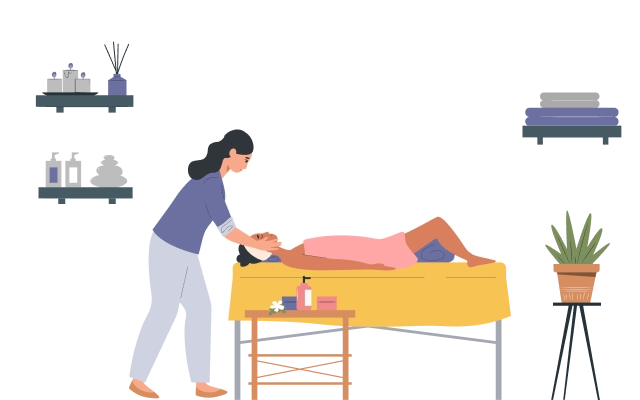
Spa visits carry friction that most people quietly tolerate: driving across town, sitting through a delayed appointment, changing in an unfamiliar room. Urban Company rewired that entire experience by moving the therapist to the customer instead of the reverse, and the category it created for Uber for Massage has since become one of the sharpest examples of how a service business can be rebuilt around a smartphone. Founders studying this model aren't just copying a feature list; they're studying a logistics problem dressed up as a wellness product.
Three things separate this vertical from typical gig-economy apps. First, the transaction happens inside a private residence rather than a public vehicle or a delivery drop-off point. Second, the "product" is a licensed human skill, not a commodity item, which means qualification and specialization data drive the matching engine. Third, session length runs from thirty minutes to two hours, so scheduling behaves more like a calendar system than a dispatch queue. Each of these constraints reshapes engineering priorities long before a single screen gets designed.
This piece works through the build in the order a founding team would actually tackle it: market rationale, architecture, feature scope, safety engineering, the development sequence, and the revenue mechanics that make the whole thing self-sustaining.
Key Takeaways
- App massage at home replaces the spa visit with a therapist-to-doorstep model, requiring calendar-based scheduling rather than instant dispatch.
- Matching depends on therapist specialization and gender preference, not just proximity.
- Three products form the platform: a customer-facing app, a therapist-facing app, and an operations console.
- Safety engineering — identity checks, live session tracking, in-app SOS — functions as core infrastructure, not a bolt-on feature.
- Revenue blends per-session commission, membership bundles, and premium slot pricing.
- A single-city launch with two or three massage categories outperforms a broad, multi-category rollout in early traction data.
Ready to Build Your Massage App?
Share the details of your massage booking app idea with our team, and we'll help you think through the practical next steps from choosing the right features and technology.

App Massage at Home: Structuring the Marketplace
Urban Company's model, and any credible clone of it, runs on a five-stage loop that differs from a ride-hailing dispatch in one critical way — matching precedes scheduling rather than happening in the same instant.
A customer selects a massage category, duration, and preferred window rather than requesting "now." The system filters available therapists by specialization, gender preference if specified, and proximity within that window. Once a therapist accepts, the booking locks into both calendars. The session happens, payment settles automatically, and a review closes the loop. Commission is deducted before payout, typically on a rolling cycle rather than instantly.
This calendar-first structure means your backend needs conflict-detection logic that ride-hailing platforms never had to build — a therapist can't be double-booked across overlapping windows, and travel time between sequential bookings has to factor into what slots even show as available.
Market Forces Behind the Category
Wellness spending has climbed steadily for years, but three specific shifts pushed it toward an app-first delivery model rather than incremental growth in traditional spas.
Remote and hybrid work schedules fragmented people's free time into shorter, less predictable windows, making a fixed spa appointment harder to commit to than a same-evening home booking. Hygiene sensitivity following the pandemic shifted preference toward private, single-client sessions over shared treatment rooms. And gig platforms across transportation and delivery normalized the idea of inviting a stranger, verified through an app, into a personal space, a psychological threshold that would have blocked this category a decade earlier.
Independent therapists gained something too: a booking pipeline without the overhead of leasing a storefront. That supply-side incentive matters as much as customer demand, since a marketplace only functions when both sides find it more efficient than the alternative.
Why Specialization Data Drives the Engine
A ride-hailing algorithm treats drivers as largely interchangeable. This category cannot. A customer booking a prenatal massage needs a therapist certified for that technique; a customer requesting a male or female therapist needs that filter respected without exception.
Building this correctly means therapist profiles carry structured metadata — certifications, specializations, gender, years of experience — queryable at match time, not just descriptive text sitting on a profile page. Skipping this step early creates a matching engine that technically works but produces poor-fit bookings, which shows up fastest in your churn numbers.
The Three Products You're Actually Building
A customer app handles discovery, booking, tracking, and payment. A therapist app handles calendar management, navigation, and earnings visibility. An operations console — often underfunded relative to its importance — handles verification, dispute resolution, and quality monitoring across the entire therapist network.
Founders consistently overinvest in the customer app's polish while treating the console as an afterthought. That imbalance breaks down fast: once you're running fifty or more daily sessions, a support team without proper tooling cannot manage complaints, verify new therapist applications, or catch a pattern of repeat issues tied to one individual. The console is where operational failure or operational control gets decided, long before customers ever notice.
Feature Scope Across the Platform
Customer-Facing Capabilities
- Category browsing across massage types (Swedish, deep tissue, sports, prenatal, aromatherapy)
- Therapist selection by profile or automatic matching
- Duration and time-slot selection with calendar-style booking
- Live tracking once a therapist is en route
- Fixed, duration-based pricing displayed before confirmation
- In-app messaging with number masking
- Gender-preference filtering
- Post-session rating tied to specific criteria (technique, punctuality, professionalism)
Therapist-Facing Capabilities
- Calendar view with accept/decline controls
- Navigation handoff to the customer's address
- Certification and document upload during onboarding
- Earnings ledger with scheduled payout dates
- Arrival and departure check-in for session logging
- Direct messaging with the customer pre-session
Operations Console Capabilities
- Verification queue for new therapist applications
- Commission and category pricing controls
- Live session monitoring dashboard
- Complaint escalation and resolution tracking
- Analytics covering booking volume, cancellation rate, and average rating by category
How to Develop an App Massage at Home
This is the sequence a founding team would actually follow, from narrowing the idea to recruiting the first therapists.
1. Narrow Your Service Scope
Launch with two or three massage categories rather than covering every specialization at once. Relaxation and deep tissue massage typically outperform niche categories like sports massage in month-one bookings, giving you a stable base before expanding into prenatal or specialized therapy sessions.
2. Map Every User Journey, Including the Edge Cases
Document the full path for both customers and therapists before any wireframe gets drawn. Beyond the happy path, work through the awkward scenarios: a therapist running late mid-route, a customer requesting a different therapist after confirmation, or a session that runs past its booked duration. These edge cases reveal backend requirements a clean flow never exposes.
3. Choose a Tech Stack Built for Calendar-Based Booking
Flutter or React Native handles cross-platform mobile development efficiently, paired with a Node.js or Django backend. PostgreSQL manages relational data like bookings and payouts, while Google Maps API or Mapbox powers live location tracking. Firebase Cloud Messaging covers push notifications, and Stripe or Razorpay, or a regional equivalent, handles payment processing.
4. Design Around Calm, Not Urgency
Wellness products call for a different visual language than food delivery or ride-hailing apps. Muted color palettes and generous white space suit the category better than saturated, high-urgency design patterns. Keep the booking flow short: category, duration, time slot, confirmation.
5. Build Conflict Detection Into the Scheduling Engine
Because bookings are calendar-based rather than instant-dispatch, the backend needs logic that prevents a therapist from being double-booked across overlapping windows, and that factors travel time between sequential sessions into slot availability. This single piece of engineering prevents the most damaging bug the category can ship with.
6. Build and Launch a Focused MVP
The first release needs booking, live tracking, payments, reviews, and core verification — nothing more. Loyalty programs, subscription passes, and add-on upsells belong in a later release once real booking data shows what customers actually want.
7. Test Scheduling and Safety Features Under Real Conditions
Stress-test back-to-back bookings for the same therapist, payment failure handling, and notification delivery. Confirm the in-app emergency contact functions reliably on real networks, not just in a controlled demo environment.
8. Recruit and Verify Therapists Before Marketing to Customers
Supply quality determines whether launch succeeds or stalls. A city with strong customer demand and a thin, unverified therapist pool produces cancellations and refunds faster than any marketing spend can outpace. Complete background checks and certification review before a single customer campaign goes live.
9. Launch, Then Let Real Usage Drive the Roadmap
Once live, prioritize fixing booking friction and expanding categories based on actual demand patterns rather than assumptions made during planning. Post-session surveys and therapist feedback should shape what gets built next.
Safety Engineering as a Core System
Treating trust features as a checklist item rather than an architectural priority is the fastest way to damage this specific category's reputation. Because sessions happen privately, inside a home, for extended durations, the safety layer needs to be as robust as the booking engine itself.
Identity verification through government ID should gate a therapist's ability to accept any booking. Background screening should run before onboarding completes, not after the first session.
Certification documents need manual or automated review against recognized massage training bodies, since an unverified credential defeats the purpose of listing one at all. Session-level tracking — recorded check-in and check-out timestamps — creates an audit trail that protects both parties in a dispute.
An in-app emergency contact, reachable during an active session without navigating multiple menus, needs to work reliably under real network conditions, not just in a demo environment.
Customer-side verification deserves consideration too, since therapists are entering unfamiliar homes alone. A platform that only protects one side of the transaction will eventually lose therapists to platforms that protect both.
Development Sequence
Start by narrowing scope to two or three massage categories with the broadest early demand — relaxation and deep tissue typically outperform niche categories like sports massage in month-one bookings. Specialized categories can layer in once a stable therapist base exists to support them.
Map every user journey before wireframing, including the awkward edge cases: a therapist running late mid-route, a customer requesting a different therapist after confirmation, a session that needs to extend beyond its booked duration. These scenarios reveal backend requirements that a happy-path flow never surfaces.
For the technology layer, Flutter or React Native covers cross-platform mobile development efficiently, paired with a Node.js or Django backend. PostgreSQL handles relational data like bookings and payouts cleanly, while Google Maps API or Mapbox manages live location. Firebase Cloud Messaging covers push notifications, and a regional payment gateway alongside Stripe or Razorpay handles transactions depending on target geography.
Interface design should lean calm rather than energetic — muted color palettes and generous white space suit a wellness product far better than the saturated, high-urgency visual language common in food delivery apps. Testing should specifically stress-test scheduling conflicts, since double-booking a therapist across overlapping windows is the single most damaging bug this category can ship with.
Recruit and verify therapists before running customer acquisition campaigns. A city with heavy demand and thin therapist supply produces cancellations and refunds faster than any marketing budget can outpace.
Revenue Architecture
Commission per completed session, typically in the fifteen to twenty-five percent range of session value, forms the primary revenue line. Layered on top, customer membership plans offering bundled or discounted sessions build recurring revenue and reduce the cost of repeat acquisition.
Therapist-side subscription tiers, offering reduced commission for a flat monthly fee, give high-volume therapists an incentive to stay loyal to one platform rather than splitting bookings across competitors.
Premium pricing for same-day or late-evening slots captures willingness to pay during high-demand windows. Add-on services — extended session time, aromatherapy upgrades, couples' sessions — function as straightforward upsells once the core booking flow is stable.
Cost Drivers Worth Planning For Early
Beyond the initial build, ongoing costs in this category run higher than in less trust-sensitive verticals. Background check services, certification verification tooling, and a properly staffed support function all add recurring expenses that a generic on-demand app budget wouldn't account for. Founders who scope only the development cost and skip these operational line items tend to underfund the exact systems that protect the brand once real users start booking.
See What Your Massage App Would Actually Cost
Every feature, from calendar-based scheduling to therapist verification, shapes your timeline and budget differently.
Conclusion
Urban Company didn't invent massage therapy or mobile booking independently; it fused calendar-based scheduling, specialization-aware matching, and safety-first engineering into a single coherent product. Replicating that success means resisting the temptation to treat this as just another home services clone.
The technical differences are real: scheduling behaves differently, matching logic carries more weight, and the trust layer needs to function as infrastructure rather than decoration.
A platform that gets these three elements right, launched narrow and verified thoroughly before scaling, stands a genuine chance of capturing loyal, repeat users in a category where trust compounds slowly and breaks instantly. Framed this way, an Uber massage app for startup business founders isn't a shortcut into the wellness industry, it's a disciplined engineering project that happens to be wrapped in a relaxing user experience.
FAQs
1. What makes an app massage at home platform different from a general home services app?
Matching depends on therapist specialization and gender preference rather than proximity alone, and safety infrastructure needs to be significantly more robust given the private, extended nature of each session.
2. How long does a typical build take?
A focused MVP covering two or three massage categories generally takes three to five months; a fully featured platform with advanced verification tooling extends to six or nine.
3. Which massage categories should a new platform launch with?
Relaxation and deep tissue massage typically capture the broadest early demand, with specialized categories like prenatal or sports massage added once therapist supply stabilizes.
4. What safety features are considered essential rather than optional?
Government ID verification, background checks, certification review, session check-in tracking, and an in-app emergency contact function are treated as baseline requirements, not enhancements.
5. How does a platform like this typically generate revenue?
Commission on each completed session forms the core model, supplemented by customer membership bundles, therapist subscription tiers, and premium pricing for high-demand time slots.
About Author

Sophia Green
Sophia Green is a passionate app developer and tech enthusiast with over a decade of experience in the industry. She specializes in creating innovative solutions that drive business success. When she's not coding, Sophia enjoys exploring the latest trends in technology and sharing her insights through writing. Her goal is to make complex concepts easy to understand for everyone.