

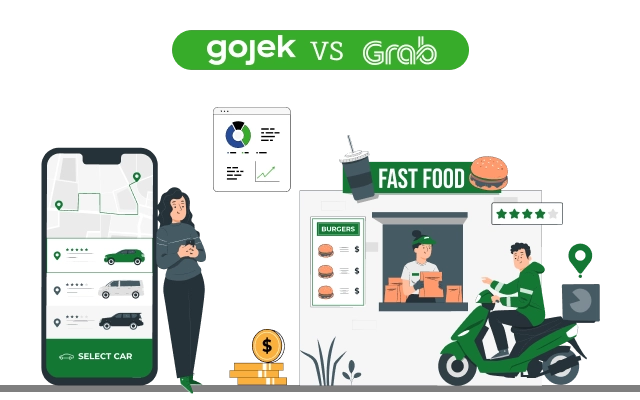
Launching a multi-service app can help businesses serve customers through one platform for rides, food delivery, grocery shopping, and other daily needs. However, choosing the right business model is an important first step. When comparing Gojek clone vs Grab clone, entrepreneurs need to understand their features, development costs, revenue models, and target markets before investing.
Both app models connect customers with service providers through a single digital platform, but their service mix, market focus, and business strategies can differ. With the right gojek clone app development approach, you can build a branded platform based on your business goals instead of copying every feature of an existing app.
This guide compares Gojek and Grab-style apps to help you decide which model fits your startup, budget, and long-term growth plans.
Key Takeaways
- Gojek clone: Suitable for businesses planning a multi-service platform with rides, food delivery, logistics, and other local services.
- Grab clone: A useful model for businesses focusing on ride-hailing, food delivery, payments, and related services in their target market.
- Features: Both models can support live tracking, digital payments, bookings, ratings, and admin controls.
- Development cost: Pricing depends on features, platforms, integrations, customization, and development approach.
- Business model: Both can earn through commissions, delivery fees, service charges, subscriptions, and promotions.
- Best choice: Select the model that matches your target customers, available budget, and launch strategy.
Take the Next Step Toward Your Super App
Move from comparing app models to planning your own platform. Talk to our team about your business requirements and the right approach to development.

Gojek Clone vs Grab Clone: What Is the Difference?
The main difference between a Gojek clone and a Grab clone is the business model you want to build around the original platforms.
A Gojek-style app is commonly associated with a broad range of on-demand services, while a Grab-style app is associated with ride-hailing, food delivery, parcel delivery, and financial services in supported markets.
A clone app is a software solution inspired by an existing platform's service model and core features. It should have its own branding, business rules, and user experience.
What Is a Gojek Clone App?
A Gojek clone app is a multi-service platform that brings different services together in one application. It allows customers to access several services without installing a separate app for every need.
Depending on the business plan, it may include:
- Taxi and bike booking
- Food and grocery delivery
- Parcel and local courier services
- Home services and bookings
- Digital payments through supported integrations
- Customer, service provider, and admin panels
This model works well for entrepreneurs who want to launch multiple services under one brand. Businesses can start with a few services and add more as customer demand grows.
What Is a Grab Clone App?
A Grab clone app is a platform inspired by Grab's service model. It can connect customers with drivers, restaurants, delivery partners, and other service providers, depending on the selected features and market.
Common features include:
- Ride booking and driver matching
- Food ordering and delivery tracking
- Parcel delivery
- Fare estimates and digital payments
- Driver and delivery partner management
- Ratings, reviews, and customer support
A Grab-style model can suit businesses that want to focus on mobility and delivery services first, with the option to expand later.
Important: These are flexible software models, not official products from Gojek or Grab. The final service mix depends on your requirements and the solution you choose.
Gojek Clone vs Grab Clone: Feature Comparison
Features affect customer experience, daily operations, development costs, and future expansion. Although both models can share many features, your implementation should reflect your business priorities.
| Feature | Gojek Clone | Grab Clone |
|---|---|---|
| Ride booking | Core service option | Core service option |
| Food delivery | Can be included | Can be included |
| Grocery delivery | Optional module | Optional module |
| Parcel delivery | Optional module | Optional module |
| Home services | Can support a wider service mix | Can be added through customization |
| Live GPS tracking | Supported through integration | Supported through integration |
| Fare calculation | Configurable pricing rules | Configurable pricing rules |
| Digital payments | Supported payment integrations | Supported payment integrations |
| Multiple service providers | Yes, based on setup | Yes, based on setup |
| Admin dashboard | User, service, and order management | User, service, and order management |
The table shows possible features for software based on these business models. It does not mean every Gojek-style or Grab-style solution includes all these functions by default.
Essential Customer App Features
Customers need a simple way to find services, place orders, and track requests.
Important features include:
- Quick registration and login
- Service selection and search
- Real-time booking or order tracking
- Estimated fares and delivery charges
- Multiple payment options
- Booking history and digital receipts
- Ratings, reviews, and support
Essential Driver and Service Provider Features
Drivers and other service providers need tools to manage requests and complete jobs.
Useful features include:
- Profile registration and verification
- Online and offline availability
- Booking notifications
- Navigation and route guidance
- Earnings and completed-job reports
- Order or ride status updates
- Customer communication
Essential Admin Panel Features
The admin panel helps business owners manage the platform from one place.
It should support:
- Customer and provider management
- Service and category settings
- Commission and pricing rules
- Booking and order monitoring
- Promotions and coupon management
- Reports and revenue tracking
- Dispute handling and support management
Which model offers more features? A Gojek-style model may be a natural fit for a broad multi-service marketplace. A Grab-style model may be a better starting point for mobility and delivery. However, the actual feature set depends on your chosen software and customization plan.
Gojek Clone vs Grab Clone: Development Cost
The cost of building either app depends on what you want to launch. There is no single fixed price for every Gojek clone or Grab clone project.
Before estimating your app development budget, review the U.S. Small Business Administration's business planning guide. It can help you organize your business goals, research your target market, and plan your startup expenses.
Factors That Affect Development Cost
1. Number of services
Adding taxi booking, food delivery, grocery delivery, and home services requires more workflows, screens, and management tools.
2. Platform selection
Building Android and iOS apps may cost more than starting with a single platform. Web-based admin panels also affect the project scope.
3. Customization
Custom designs, business-specific workflows, unique pricing rules, and advanced dashboards can increase development time and cost.
4. Third-party integrations
Maps, SMS notifications, payment gateways, push notifications, and identity verification may involve setup costs or ongoing usage fees.
5. Advanced features
AI-based recommendations, smart driver assignment, demand-based pricing, and detailed analytics may require additional development.
6. Maintenance and hosting
Server costs, monitoring, bug fixes, security updates, and ongoing support should be part of your budget.
Ready-Made Software vs Custom Development
| Cost Factor | Ready-Made Clone Solution | Custom-Built App |
|---|---|---|
| Initial development | Often lower | Often higher |
| Time to launch | Usually shorter | Usually longer |
| Customization | Depends on source code and provider | Greater control over development |
| Source code | Depends on the agreement | Usually developed for the project |
| Maintenance | Depends on the support plan | Managed through your team or vendor |
| Best suited for | Faster market entry | Unique business requirements |
For startups working with limited budgets, a Gojek Clone for Startups can be a practical starting point. It allows entrepreneurs to explore a ready-made platform approach and assess which features are essential before expanding.
Before choosing a vendor, request a detailed quotation that covers app modules, source code rights, customization, deployment, support, and third-party fees.
Gojek Clone vs Grab Clone: Business Model
Both models can generate revenue by connecting customers with drivers, merchants, delivery partners, and other service providers. The right revenue mix depends on the services you offer and how your platform operates.
Gojek Clone Business Model
A Gojek-style business model can support several revenue streams across multiple service categories.
Common revenue sources include:
- Service commissions: Deduct a percentage from completed bookings or orders.
- Delivery fees: Charge customers for eligible delivery services.
- Booking fees: Apply a platform fee to selected rides or services.
- Merchant subscriptions: Offer paid plans to eligible restaurants or service providers.
- Promoted listings: Charge merchants for additional visibility.
- Premium services: Offer higher-priced service options where demand exists.
For example, a platform offering taxi rides and food delivery could earn commissions from ride bookings and restaurant orders. It could later introduce grocery delivery or other services when the business is ready.
Grab Clone Business Model
A Grab-style business model can focus on transport and delivery while adding other revenue streams based on local demand and regulatory requirements.
Potential revenue sources include:
- Ride commissions or service fees
- Food delivery commissions
- Delivery and booking fees
- Merchant advertising
- Subscription programs
- Partner service fees
- Financial service revenue, where permitted and properly supported
For instance, a ride-hailing platform can earn a fee from completed trips. If it adds restaurant delivery, it can generate additional income from merchant commissions and delivery-related charges.
Financial services require separate consideration because licensing, compliance, payment partnerships, and market rules can affect what the business is allowed to offer.
Which Business Model Is Better?
| Business Goal | Suitable Starting Approach |
|---|---|
| Offer many local services | Gojek-style model |
| Focus on taxi and bike rides | Either model |
| Start with food and parcel delivery | Either model |
| Build a multi-category marketplace | Gojek-style model |
| Expand from mobility into delivery | Grab-style model can be a fit |
| Test demand with a small budget | Start with a limited service mix |
Neither model guarantees higher revenue. Success depends on local demand, service quality, provider availability, customer retention, pricing, and operating costs.
How to Choose the Right Clone App for Your Business
When planning your app's payment features, review the PCI Security Standards Council website to learn about payment card data security standards and the requirements relevant to your payment setup.
Step 1: Identify Your Target Market
Research your intended city or region. Check demand for rides, food delivery, grocery app development services, parcel delivery, and other categories.
Step 2: Select Your First Services
Avoid launching too many services at once. Start with the categories you can manage well and expand after testing demand.
Step 3: Define Your Budget
Include development, customization, marketing, hosting, payment integrations, provider onboarding, and ongoing support.
Step 4: Check the Software Features
Confirm that the platform includes the customer app, provider app, admin dashboard, booking management, tracking, and payment options you need.
Step 5: Review Ownership and Support
Ask whether you receive the source code, what you can customize, who manages deployment, and how long technical support lasts.
Step 6: Plan for Growth
Choose software that can support additional services, more providers, new service areas, and higher booking volumes without requiring a complete rebuild.
How to Launch a Gojek or Grab Clone App
A clear launch plan can reduce delays and help you focus on the features customers actually need.
- Research the market: Identify competitors, service gaps, and customer needs.
- Choose your model: Decide whether to focus on mobility, delivery, or multiple services.
- Select your software: Compare ready-made and custom development options.
- Customize the platform: Add your branding, pricing rules, and required integrations.
- Test the applications: Check bookings, payments, notifications, tracking, and provider workflows.
- Onboard service providers: Recruit drivers, restaurants, or other partners before launch.
- Launch in a limited area: Collect feedback and fix problems before expanding.
- Track performance: Monitor completed bookings, repeat customers, service quality, and operating costs.
Estimate Your GojekClone App Cost
Have a multi-service app idea in mind? Get a personalized cost estimate based on your desired features, service modules, platform requirements, and business goals.
Conclusion
The choice between Gojek clone vs Grab clone depends on your business goals, target market, and planned service mix. A Gojek-style app can be a good fit for entrepreneurs who want to bring multiple on-demand services together. A Grab-style app can suit businesses that want to focus on ride-hailing, food delivery, and related services.
Both models can support bookings, GPS tracking, digital payments, provider management, and several revenue streams. The final cost depends on the selected features, customization, platforms, and integrations.
Start with a clear business plan, compare software providers carefully, and launch only the services you can support well. You can then expand your platform based on customer demand and business performance.
FAQs
1. What is the main difference between a Gojek clone and a Grab clone?
A Gojek clone is commonly used as a model for a multi-service platform, while a Grab clone often focuses on ride-hailing, food delivery, and related services. Both can be customized to support different service categories.
2. Which is better for a startup: a Gojek clone or a Grab clone?
A Gojek clone may suit a startup planning to offer several local services under one brand. A Grab clone may be suitable for a business starting with rides and delivery. The better choice depends on local demand, budget, and operational capacity.
3. How much does it cost to develop a Gojek clone app?
The cost varies based on the number of services, mobile platforms, customization, integrations, and ownership requirements. Request a project-specific quotation instead of relying on a fixed estimate that may not match your requirements.
4. Is a Grab clone app cheaper than a Gojek clone app?
Not necessarily. A basic Grab-style app with limited services may cost less than a multi-service Gojek-style platform. However, a highly customized Grab-style solution can cost more than a basic Gojek clone. The scope determines the price.
5. What features should a Gojek clone app include?
Core features can include user registration, service selection, booking management, live tracking, payment integration, ratings, notifications, provider management, and an admin dashboard. Additional modules depend on your business model.
About Author

Thomas Joe
Thomas Joe is a seasoned app development expert with a knack for problem-solving and a deep understanding of the digital landscape. With a background in both design and development, Thomas brings a unique perspective to his work, blending creativity with technical expertise. Outside of work, he loves mentoring aspiring developers and contributing to the tech community through his blog posts.