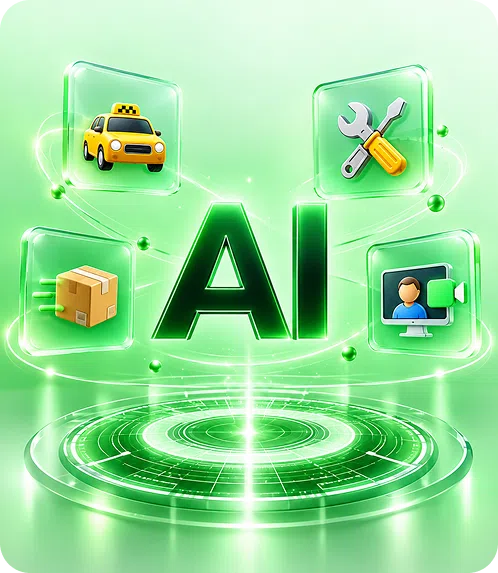
One app, one brand, four businesses: transport, delivery, handyman services and video consultation. 101+ services come ready on a microservices build that scales with demand, and your apps go live in five working days.
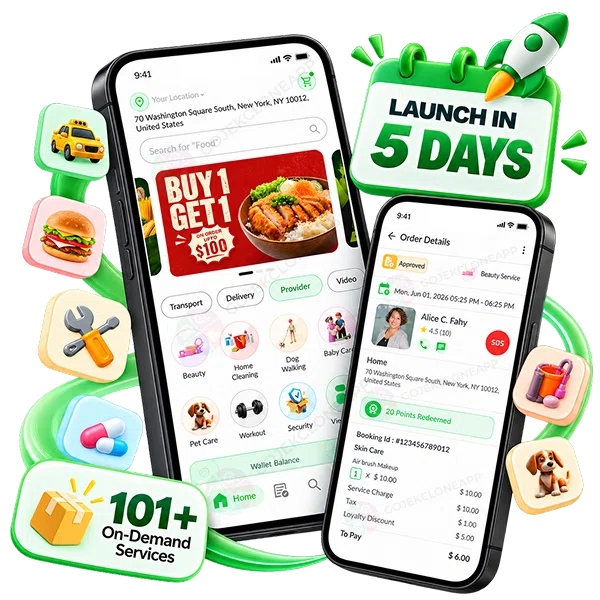
Nothing on this platform is a prototype 101+ services and four apps are running right now, waiting for your logo and your prices.
A Gojek clone script is a pre-built multi-service platform that you rebrand and launch, rather than commissioning a development team to build one. It carries four businesses at once: transport, delivery, on-demand services and video consultation.
All four arrive configured and operational, together with 101+ individual services, four mobile apps and the admin dashboard that run them.

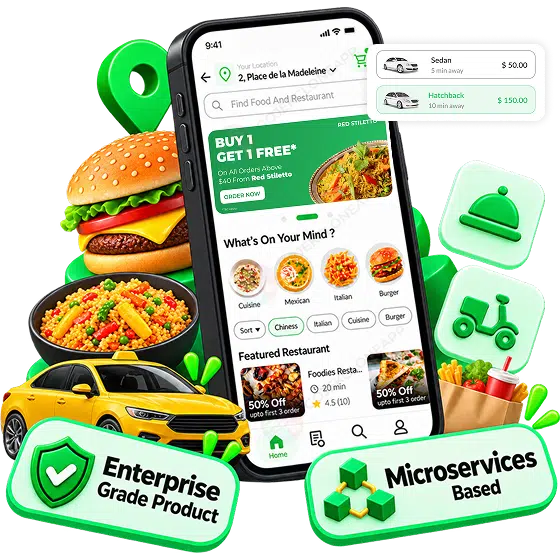
Built As A Super App, Not A Script
Most clone apps get slower as your business grows. This one is built in separate parts, so you can add a new city or service without rebuilding anything.
A Gojek clone app runs 101+ services, each matching how that business actually operates. A grocery store blocks orders under a minimum value. An electrician charges more once the work turns out bigger. A driver records a trip taken off the app.

Food

Grocery

Medicine

Alcohol

Flower

Water

Fuel

Stationary

Taxi Ride

Bike Ride

Courier Service

Bike Rental

Car Rental

Intercity

Taxi Pool

Taxi Bidding

Beauty

Home Cleaning

Dog Walking

Baby Care

Pet Care

Workout

Security

Tutor

Laundry Service

Maid Service

Pest Control

AC Repair

Tow truck

Car Wash

Car Repair

Electricians

Carpenter

Tour Guide

Carpet Cleaner

Sofa Repair

Catering

Real Estate Agent

Computer Repair

Physio Therapy

DJ Guide

Photo graphy

Fire Fighter

Mobile Technician

Mechanic

Home Painting

Locksmith

Insurance Agent

Lawyer Service

Interior Design

Language Translator

TV Repair

Law

Yoga

Tutor

Astrology

Doctor

Fitness
A Super app runs on four separate apps: customer, driver, store and provider. Every feature below is live in the current release.
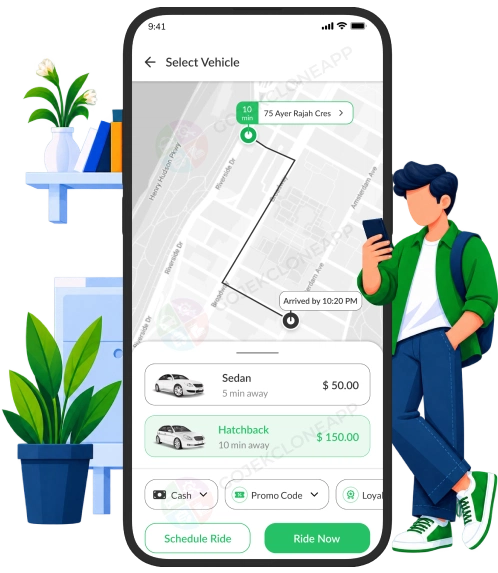

One account books rides, food, groceries, repairs and consultations.

Customers find any service in seconds by price, rating or distance.

Customers see the full price before they book, so there are no surprises.

Customers pay by cash, card or wallet, the way your market already pays.

Customers book for a later date and get a reminder before it starts.

Sign up with a mobile number, then log in with just a fingerprint.
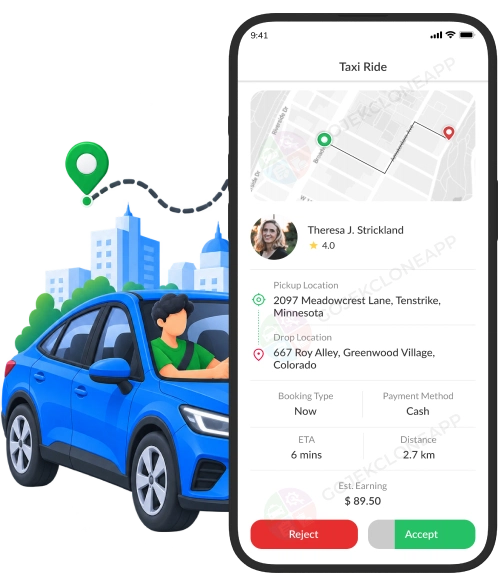

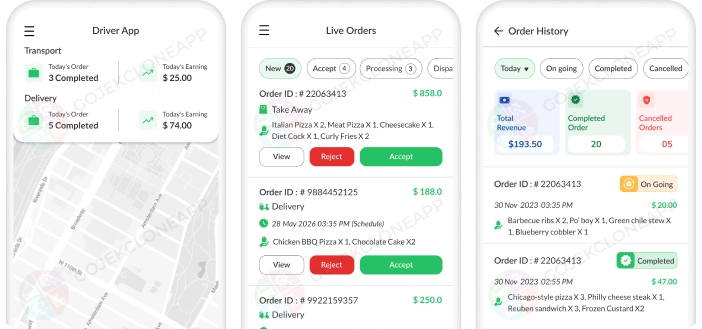
A live map shows where orders are coming from, so drivers move toward the money.

Every completed job, fare and tip stays on record for the driver to check anytime.

A driver registers a car and a bike, then switches between them as work allows.

Drivers go online or offline with one tap and choose their own hours.

One account takes taxi rides, bike rides and courier jobs without a second login.

Built-in Google Maps guides drivers from pickup to drop-off.
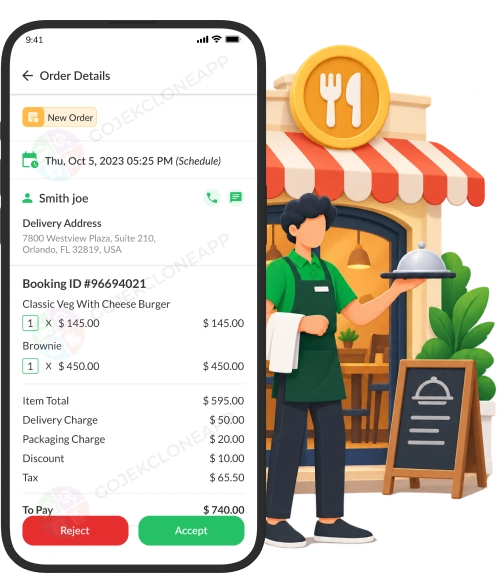

New orders arrive with a sound, and one tap accepts, rejects or marks them ready.

Stores set their own delivery radius, minimum order and packaging fee.

Stores run their own promotions on slow days without waiting for anyone’s approval.

Stores add items, change prices and mark items sold out from the app.

Stores see their current plan, what it covers and when it renews, in one place.

Stores see the delivery partner arrive and know when the order leaves.
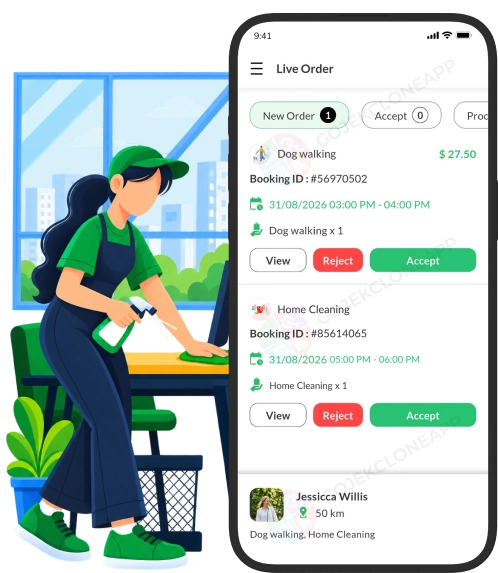

Providers choose how far they will travel, so nobody wastes an hour on a bad job.

Providers set their own prices for single jobs or bundled packages.

If a job turns out bigger, the provider adds the extra cost on the spot.

Doctors, lawyers and tutors take paid video calls right inside the app.

Providers show photos of past work to win more bookings.

Availability is set by day and time slot, so bookings never land on a day off.
Build it, buy it cheap, or start from something finished. Each route costs you something different, and not always in money.
| Factor | Gojek Clone App | Custom Build | Low-Cost Clone Script |
|---|---|---|---|
| Architecture | Microservices. One part can change without touching the rest. | Possible, but only if you hire and pay a full team to build it from scratch. | Usually one codebase, so a small change in one place can break the whole app. |
| Deployment | Docker containers. Test and live environments behave identically. | Your team decides the setup, then pays to build, run and maintain it for years. | Manual server setup, and every move to new servers is usually billed as extra. |
| Speed And Security | Cloudflare delivers pages locally and blocks attacks before arrival. | Yours to configure, pay for and keep running, with no CDN or firewall included. | Usually shared hosting, with CDN and firewall protection sold as paid add-ons. |
| Updates | Rolled out service by service. Customers never see downtime. | Depends on how your engineers built it, and every update needs their time. | Every update means a full redeploy, and the app goes offline while it runs. |
| Hosting And Data | Your servers. Customer records and payments stay in your account. | Fully yours, but only after you build the servers and hire a team to run them. | Often shared space on the vendor’s own servers, so your data is not fully yours. |
| Scaling Up | A new city or service is a settings change, with no rebuild and no new code. | Scales only as far as the original design allowed, then needs more development. | Works for a small launch, but growth usually ends in a rewrite on a new system. |
| Time To Launch | Five working days from kickoff to live, because the platform is already built. | Eight to twelve months of development before the first order goes through. | Quick to launch, but slow to become stable enough to run a real business. |
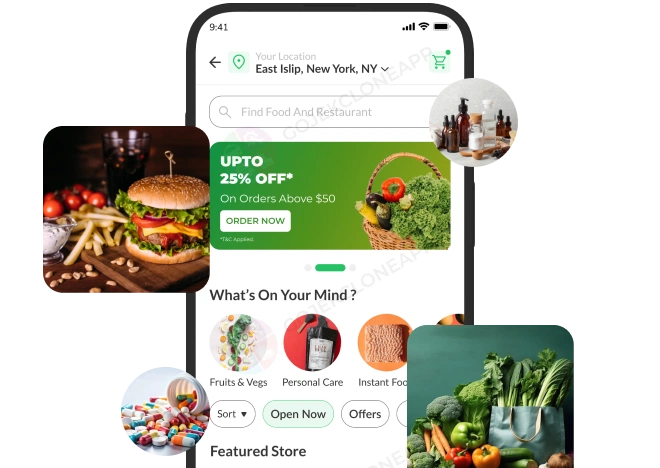
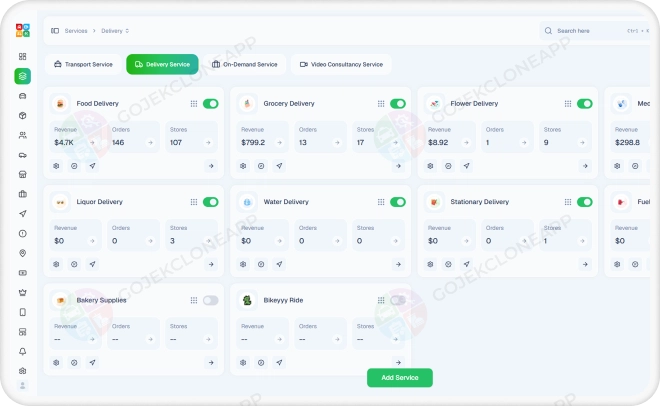
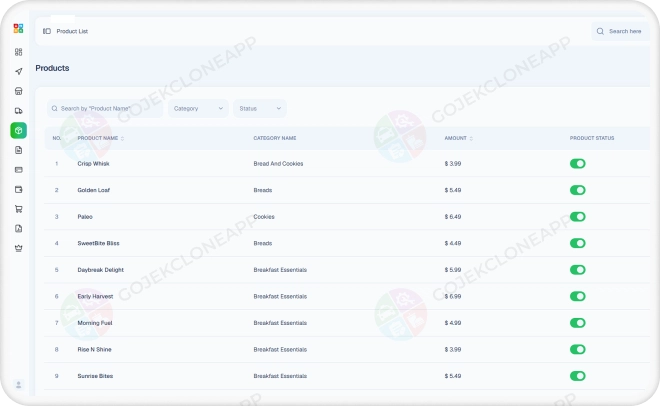
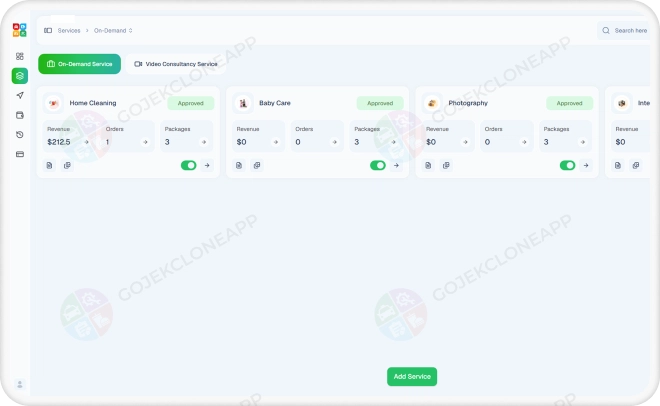
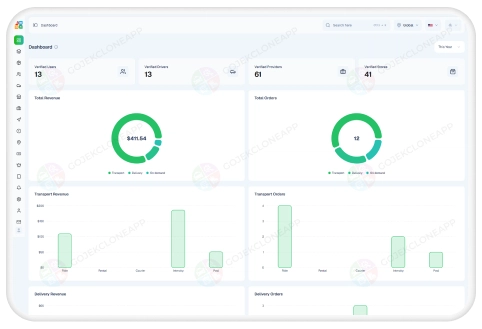
The admin dashboard controls services, commission, fares, tax, regions, users, payouts and promotions. Four separate dashboards cover super admin, stores, providers and drivers, each with its own access.






AI handles surge pricing, payment reporting, fraud checks, promo codes, booking support and platform monitoring, so a small team can run a large business.

Fares go up on their own when there are more ride requests than drivers, but never past the limit you set.

An AI assistant answers common customer questions right away, so your support team only deals with real problems.

The system spots customers who are ordering less and sends each one the right offer to bring them back.

Earnings, commissions and payouts are added up for you, so month-end reports are ready without any manual work.

The platform checks itself day and night and alerts your team about problems before customers notice them.

Fake accounts, fake rides and payment abuse are spotted and blocked early, before they cost you any money.
A Gojek clone app package includes mobile apps and admin dashboard, fifteen deliverables, all working before launch day.
Browser-based Dashboard for you, your stores and your providers, plus a landing page that brings in new customers.
Separate apps for customers, drivers, stores and providers, built for both Android and iOS and ready for Google Play and the App Store.
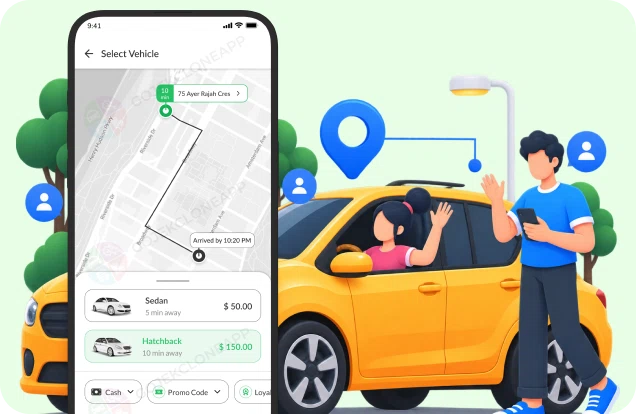
Each business has its own booking flow. Pick one below to see how an order moves from start to finish.
Customers set a pickup and drop-off point, choose a car or bike and see the fare before they book. Nearby drivers get the request and accept it in one tap. Customers track the ride live, pay by cash, card or wallet, and your commission is taken from every trip automatically.
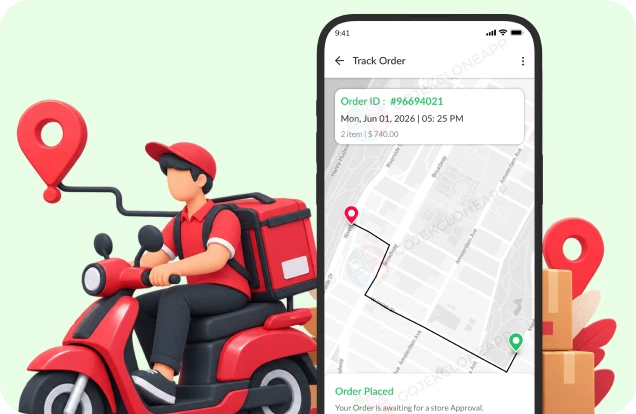
Customers browse nearby stores, from restaurants to grocery shops and pharmacies, and order in a few taps. The store accepts and prepares the order, a delivery partner picks it up, and the customer follows it live on the map. Each store sets its own menu, prices, delivery area and opening hours.
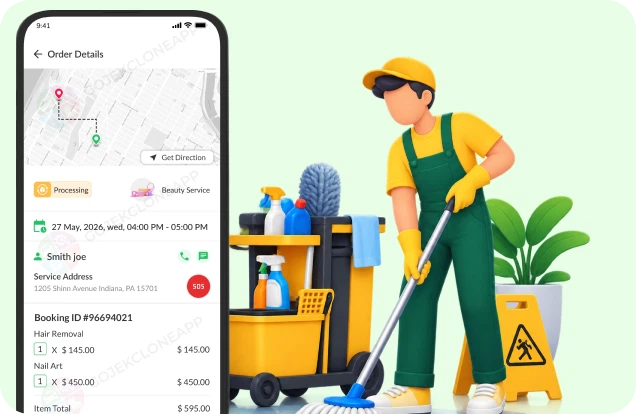
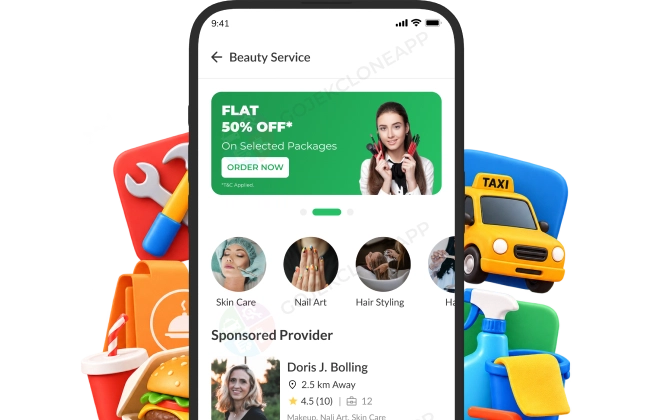
Customers choose a service such as cleaning, plumbing or beauty, compare providers by rating, price and past work, and book a time slot. The provider reaches the address with in-app directions. If the job turns out bigger, they add the extra charge on the spot, and the customer pays once it is done.
Customers pick an expert such as a doctor, lawyer or tutor, check the fee and book a time. At the chosen slot, both join a video call inside the app, with no outside meeting link. The customer pays through the app, and your commission is taken from every consultation automatically.

Nine years of launches taught us which questions buyers should ask. These are the nine, answered before you have to ask them.
Kickoff on Monday, live by Friday. The product is already finished, so those five days go to your branding, setup, configuration and launch on both app stores, with your project manager guiding every step.

Three hundred businesses in 88 countries have launched on this platform over nine years. Local payment gateways, driver onboarding, city regulations: the problems that stop a first launch have all come up before and been solved before.

Twelve months included. The relationship starts at launch, it does not end there.

Signed before any detailed conversation. Your plan and your market stay yours.

The brand, the code, the data and every third-party account belong to you on a lifetime license. No renewals, no permissions to ask for.
One named person runs your build and stays reachable afterwards, so you never explain the project twice.

Six income streams run through the same platform. You decide which ones are active, what they charge, and whether a different city gets different numbers.

You earn a percentage of every ride, delivery, home visit and consultation. Set different rates for each service and each city, so food, taxi and a new city can all carry their own numbers.

Extra charges sit on top of commission: delivery fees per service, packaging charges from stores, extra charges from providers on site, and automatic tolls on rides. Small alone, big together.

When ride requests outnumber drivers, fares rise on their own and you earn more on the same trip. You set when it starts and how high it goes, and it pulls more drivers online too.

Stores and providers pay to appear at the top of the customer app. You choose who shows, where and for how long, and sell slots weekly or monthly, so you earn before any order comes in.

Sell banner space on the home screen, inside categories and on store pages to brands like banks or telecom companies. This income grows with your user base, not your order count.

Drivers, stores and providers pay a fixed monthly fee instead of or along with commission. You create and price the plans, giving you steady income you can plan around.
Real reviews from business owners who launched their multi-service apps with us, in their own words.

The company delivered the best product and has different plans for anyone to choose from. The choice can be between purchasing the software or renting it. The team was helpful and provided suitable options based on our needs. I highly recommend them.
 Lesotho

This is a wonderful company to partner with. We started two years ago, and they are always willing to help. They are quick and friendly. Their team is supportive and always ready to assist whenever we need help. I can recommend them for your next project.
 South Africa

Throughout the project we conducted together, they provided an efficient working environment and excellent support. … We highly recommend them to anyone looking for a reliable, trustworthy & long-term business partner. Thank You White Label Fox team.
 France
I want to extend my deepest gratitude to the team at White Label Fox for their hard work and dedication in bringing my vision to life. Their expertise and attention to detail have truly made a difference in the success of my business. Thank you!
 Tanzania
We are absolutely delighted with our petjet app! The White Label Fox team produced an excellent product that surpassed our expectations, and they delivered it on time. I look forward to working on future projects with this team. Thank you White Label Fox Team !
 United States
Short videos from clients around the world, talking about their launch, support and results.

Mr. Adir
USA


Mr. Medyan

Jordan
Mr. Labeeb
USA

Mr. Stan
South Africa
Our clients have rated us on Trustpilot, Google, Clutch and GoodFirms. These ratings reflect the quality, support and on-time delivery that businesses around the world rely on.




Every part of the stack is on a current, actively supported version, with no legacy framework holding the build back.
 Terraform
 Docker
 Valkey
 Cloudflare
 Laravel
 PHP
 PostgreSQL
 MongoDB
 Node.js
 Firebase
 Google Maps
 Auth.js
 Next.js
 React
Node.js
 TypeScript
 Tailwind CSS
 Radix UI
 shadcn/ui
 Zustand
 Zod
 React Hook Form
Auth.js
 Redux
 GSAP
 TanStack Query
 Axios
 100ms
 Dart
 Flutter
Google Maps
 Android Studio
100ms
Dart
Flutter
Google Maps
Android Studio
100ms
Dart
Flutter
Google Maps
Android Studio
Android
Redux
 Melos
Firebase
Dart
Flutter
100ms
 PHPUnit
 Playwright
 ESLint
 Maestro
Quick answers to the questions we hear most often from businesses before they get started.
A Gojek clone app is a ready-built multi-service platform that lets you run ride-hailing, delivery, home services and video consultations as one business under your own brand. You buy finished software, configure it for your market and launch, instead of paying a development team to build it from nothing.
It’s built for founders launching their first multi-service business, taxi or delivery operators adding new services, and regional companies that want to become the local super app. If your plan puts more than one on-demand service in a single app, the platform is designed around that business.
Yes. Business models are not protected, so running a multi-service app that works like Gojek is legal. The Gojek name and logo are registered trademarks, so your app must launch under your own brand and never use theirs. Because the platform is fully white-labeled, that’s how it ships.
No. Your logo, colors and app name appear on every screen, every invoice and both store listings. Nothing in the apps, the web panels or the customer website points back to the developer, so your customers only see your brand.
Yes. Many businesses launch with taxi rides or food delivery, prove demand in one city, then switch on more services from the admin dashboard. All 101+ services are already in the platform, so expanding is a settings change, not a new build.
The platform has been deployed in 88+ countries. Multi-language and multi-currency support are built in, prices and rules can be set per region, and a local payment gateway is integrated during setup, so the app fits how your market already books and pays.
Most low-cost scripts are one large codebase, so a change in one place can break another, and growth often ends in a rewrite. This platform runs on microservices in Docker containers, so each service updates and scales independently as your order volume grows.
Yes. Submit the contact form and you’ll get demo access by email, covering the customer, driver, store and provider apps plus the admin dashboard. A walkthrough call follows, where the team maps the demo against your services, market and launch plan.
The price depends on how many services you launch with, which markets you operate in and how much customization you need, so every quote is built from your scope. Every package includes source code, white labeling, server setup and app store submission. Share your plan through the contact form for an exact figure.
The software is a one-time purchase with a lifetime license and full source code, so there are no license renewals and no monthly fee for using the platform. Your recurring costs come from third parties such as hosting and payment gateways.
Plan for server hosting, payment gateway fees, SMS and map API usage, and Apple and Google developer accounts. The providers you choose bill these directly, and the costs rise with order volume. Marketing, partner onboarding and customer support are the other costs to plan for.
Six revenue streams are built in: commission on every order, delivery and service fees, subscriptions for drivers, stores and providers, paid featured listings, in-app advertising, and demand-based surge pricing. You choose which ones to turn on and set rates separately for each service and region.
Commission starts with the first completed order after launch. Some streams can earn before orders flow at all: stores and providers can buy featured placement, and advertisers can buy banner space while you’re still building supply. That income helps fund early marketing.
In almost every case, yes. A custom multi-service build typically takes eight to twelve months and a full engineering team before the first order goes through. A ready-made platform launches in days, so your budget goes into marketing and supply instead of development, and you learn from real orders sooner.
No. Everything in the agreed scope is delivered at the agreed price. If you ask for something new partway through, such as a custom feature or an extra integration, it’s quoted separately and needs your approval before any work starts.
Commission, fees and surge rules are set per service and per region, so you can price a busy city differently from a new one and adjust as data comes in. Subscriptions give you a predictable base of partner income, and fees charged on top of commission add margin to every order.
You get fifteen deliverables: customer, driver, store and service provider apps on both Android and iOS, plus seven web components covering super admin, store, provider, driver, dispatcher and billing panels and a customer website. Everything carries your brand and comes with the full source code.
Your customers book any of your services from one account, see the fare before confirming, pay by cash, card or wallet, and track the job live on a map. They can also schedule bookings, add stops to a ride, chat with drivers through masked calling and earn loyalty points.
Drivers upload their documents for your approval, and expiry reminders keep the fleet compliant. One driver account can handle taxi, bike and courier work across several vehicles. A demand heat map points drivers toward busy areas, and earnings settle through an in-app wallet on the payout rules you set.
Each store manages its own menu or catalog, accepts orders, sets its delivery radius, minimum order value, packaging charges and opening hours, and runs its own offers. Restaurants with their own riders can assign private drivers, and every store tracks earnings and requests payouts from its app.
Cleaners, plumbers, beauticians, tutors and other providers set their own services, packages, prices, working hours and travel radius. They can add extra charges on site when a job grows, show a portfolio of past work, take video consultations and request payouts from their wallet.
You control everything on the platform: services, commission, tax, fares, regions, users, payouts, subscriptions, promotions and notifications. A live God’s View dispatcher shows every ride and order by status, and reports export to Excel or PDF. You can also create sub-admins whose access is limited to their own region.
Yes. AI handles surge pricing, payment reporting, fraud screening, promo code targeting, routine booking support and round-the-clock platform monitoring. These features run in the background, so a small operations team can handle a large volume of orders without hiring at the same rate.
The mobile apps are built in Flutter, so Android and iOS share one codebase that compiles to native code, and features and fixes reach both platforms at the same time. The web panels run on Next.js and the backend on Laravel, all on current, actively supported versions.
Yes. The 101+ services are where you start, and there’s no upper limit. You create new services from the admin dashboard with their own categories, pricing and booking flow. Because the platform runs on microservices, a new service goes live without interrupting the ones already taking orders.
Yes. You draw business regions on a map, then set fares, commission, tax and available services for each one separately. A launch city can run lower commission to attract partners while an established city charges standard rates, all from the same dashboard.
Your logo, colors, app name, icons and store listings are applied across every app and panel as standard. Beyond branding, screens, flows and features can be customized to fit your business model. That work is scoped and quoted before it starts, so the timeline stays clear.
Yes. Full source code for every app and web panel comes with every package. Your own developers, or any agency you hire later, can maintain and extend it, so the platform is never tied to the team that built it.
You do. The platform is deployed on servers your business controls, so customer records, order history, payment data and the database sit in your own account. Nothing is hosted on shared vendor infrastructure.
Yes. You can create sub-admins and set view, add, edit and delete permissions for each one, then limit each sub-admin to a specific region. A city manager sees and manages only their city, while you keep full control of the whole platform.
One local payment gateway is integrated during setup, so customers can pay the way they already pay in your market. Cash on delivery and the in-app wallet work alongside it. Additional gateways can be added as part of your project scope.
Yes. You can put each group on commission, a monthly subscription or a mix, turned on separately. For example, drivers might pay a fixed monthly fee while stores pay commission per order, and you can change the model as the market matures. You also set the payout limits and settlement rules.
A standard launch with your branding and market configuration takes five working days. The platform is already built and tested, so that time goes to setup, not development. Apple and Google then review the apps, which usually adds a few days on their timeline.
There are four stages. First, an NDA is signed and your project manager collects your brand assets and requirements. Second, your branding is applied across every app and panel. Third, services, regions, fares, commission and your payment gateway are configured. Finally, servers are set up, the apps go to both stores and the source code is handed over.
Yes. Both apps are submitted under your own developer accounts at no extra cost. If Apple or Google rejects a submission, the team makes the fixes and resubmits, so you don’t have to work through store review guidelines on your own.
Yes, server setup is included. The platform is deployed in Docker containers on infrastructure your business controls, with Cloudflare handling content delivery and network security. Pages load quickly for customers, and malicious traffic is filtered before it reaches your servers.
The Enterprise package includes twelve months of free bug support from launch day. Your project manager stays reachable after go-live, so issues go to someone who already knows your setup. Work beyond bug fixes, such as new features or extra integrations, is scoped separately.
Yes. A dedicated project manager is assigned at kickoff and owns your project through launch and beyond. Every question goes to the same person, so you never have to explain your business twice or chase updates through a support queue.
Yes. The microservices architecture lets each part of the platform scale on its own as demand rises, and updates roll out one service at a time with no downtime. You can open a new city or handle a much larger order volume without moving to a different system.
Yes. A non-disclosure agreement is signed before the first detailed conversation, before you share any requirements, so your business plan, target market and financial numbers stay private from the start.
Our most-read articles, covering the questions readers ask most often. New posts are added regularly, so there is always something worth a look.
Gojek Clone App Development Works in 3 Different Modules Transport Service, On Demand Delivery, and Hire Service Provider